
In 2025, I took a stand for human creativity. Apparently, I’m the bad guy?
Last year, I published a graphic novel about a kid whose favourite teachers get replaced by AI-powered robots… so he fights back.
Obviously. Right?
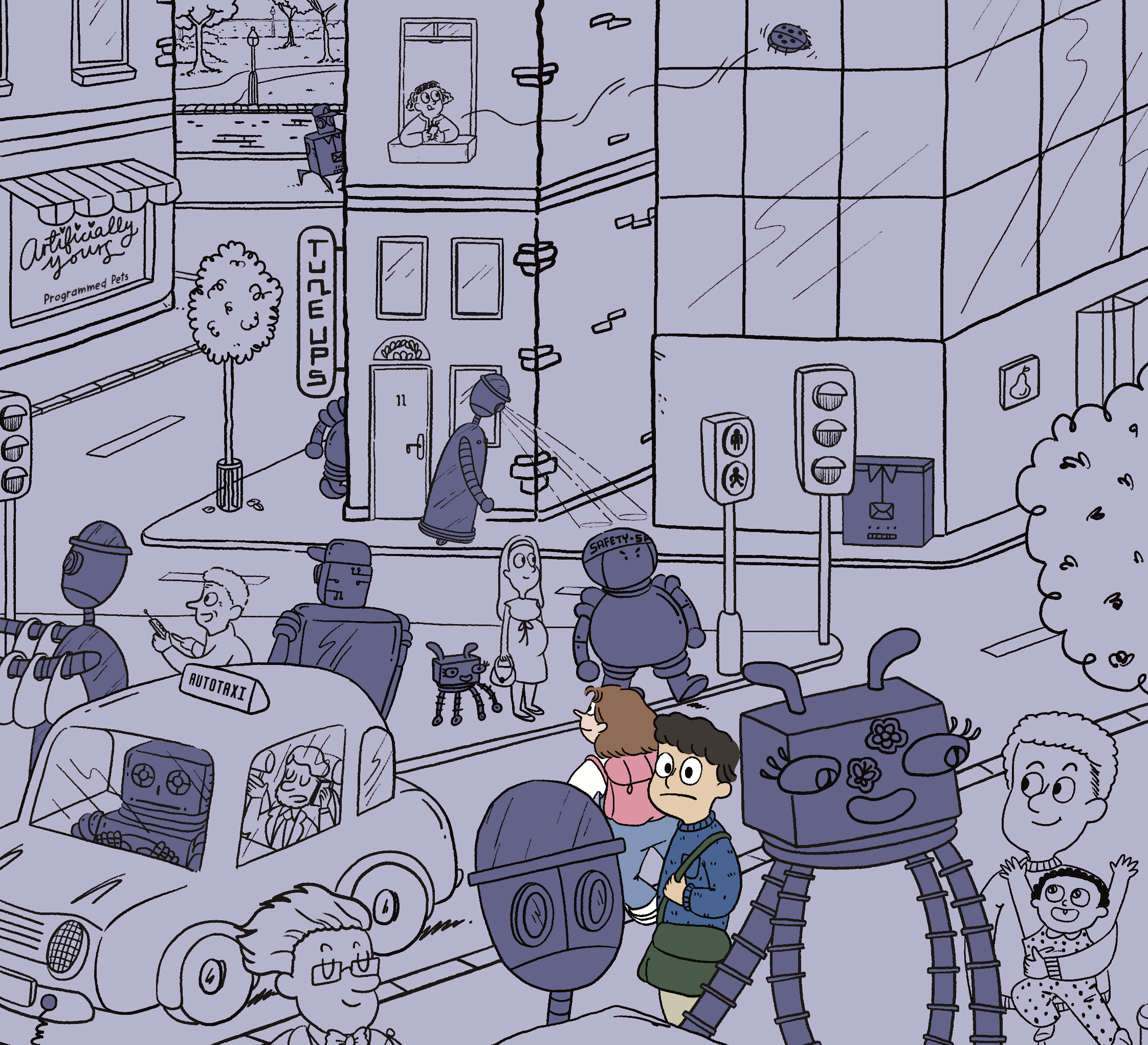
I couldn’t have known that the world in which I was writing the manuscript for SCHOOLBOT 9000, from 2021–2023, would have tilted so far in the other direction by the time it was published.
In 2021, I had just left my job writing and editing tech articles for Google Cloud, where I swallowed a bitter pill — better tech means people get replaced, every time. And I should clarify what “better” means, because that’s what I was taught by Google. No room for subjectivity in a place like that. “Better” meant faster, more efficient, and critically, cheaper. Artificial intelligence was being deployed in companies of all sizes, and whole departments were being downsized, then dissolved completely. This is before ChatGPT came out. The whole world was talking about AI by 2022, but I had been writing about predictive analysis, recommendation engines, deep learning — things that don’t ignite the public imagination as easily as a chatbot you can say hello to and it says hello back. And makes you a pretty picture.
As OpenAI was getting ready to launch ChatGPT, the atmosphere became unsettled. Suddenly, I was seeing articles in the news that weren’t just intriguing concept pieces about a future where robots did human jobs — it was a probable reality, and people were starting to get worried. At Google, “robot” became a banned word. I remember writing an article that was literally about a company that makes robots, and marketing executives lining up in the margin to comment “delete this”, “delete”, and one somewhat frenzied “DELET!” I lost count of the articles I wrote marvelling over tech solutions that gave employees “more time to focus on other tasks” (read: fired), enabled “higher-value output” (fired again), and “optimised the department” (fired, fired, fired). It was demoralising to say the least. And I felt like I needed to be on the other side of it — fighting in our corner, not celebrating our supposed obsolescence.
So, this was the backdrop against which I wrote SCHOOLBOT 9000 — a fun, big bad tech adventure, with a timely message behind it. I thought the world would rush to my side, ready to fight. We weren’t going to let machine efficiency and optimisation replace our humanity! Kick AI to the curb! We’re not adopting!
But what I didn’t count on was the power of the propaganda machine to get everybody on board. Fast. Like, I’ve heard about this. I’ve read about it in history. But to watch it in real life was pretty insane. Superbowl ads. Sponsored news media. And so much fear-mongering about what might happen if you don’t adopt AI — you’ll get “left behind”. Your kids will be left behind. The whole lot of you will be completely unemployable. Besides, look how fun it is! Look at this pretty picture of you in different art styles! How can anything that talks just like a friend, be anything but?
I went from feeling like a champion for human creativity and community, to being the party pooper. The Luddite! I was preaching and, in the face of a Bright New Future for Humanity™, I was seriously bringing the vibes down.
I was shocked and disappointed (to be fair, the way a lot of debut authors are probably shocked and disappointed when their baby doesn’t become the breakout star of the pageant). There were plenty of people who liked the baby, thought the baby was really special and well-drawn and had something important to say — OK, I’m going to drop the baby thing now — but there were a lot of people who frankly, just didn’t want to talk about it.
It’s so funny writing books for kids and having all your reviews come from adults. They’re the buyers, and they’re the ones online. It makes sense, but it’s weird. You inevitably get a very adult perspective — often jaded and cynical. We read too much news, guys, we’re too locked in to the 24-hour news cycle. I stopped looking at reviews partly because it was discouraging to see people talk about how the book was difficult to read “in light of everything going on with ChatGPT”. And I get it. Read the news and every day the AI apocalypse is inching closer, with nothing we can do about it. It’s not something you want your kids thinking about. Much better to get them the latest cartoon animal caper or school drama diary series. What made the situation more frustrating was that every time an actual kid responded to Schoolbot 9000, their feelings were much more balanced. They got the idea that AI in schools can be useful, but it’s never going to replace real human teachers, and also it’s important not to rely on it too much. Simple! In sharp contrast, the adult lens was getting in the way of what I’d intended as a positive message: We don’t have to accept the crush of AI into our lives, we can band together as a community, we can hold on to our humanity, we can fight back. The more the adult reviews piled in, the more my book was reading as downbeat and dystopian, not suitable for kids.
I don’t know any other kids’ author who can say their book gets all the parents really depressed. Niche flex?
I do maintain that we’re in flux when it comes to public opinion about AI. For one thing, we have the news and sponsored media spinning us in every direction. For another, it might feel like Skynet is coming tomorrow, but this new form of AI is still in its infancy. Over the past few months, I’ve been grateful to see the conversation shifting away from frenzied corporate grabbiness and back to accountability. I’m also relieved and proud to see that human creativity isn’t going down without a fight.
(If I may be so bold, the next thing I’d like to see is more parents braving the AI conversation with their kids, in all its complexity, and starting with Schoolbot 9000.)
This blog post first appeared on whatgoesinmustcomeout.substack.com
